Tuesday, June 17, 2014
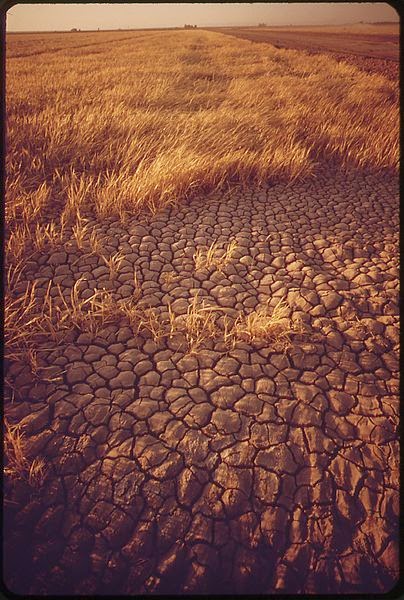
Prayer drought : When faith seems dry
There are times in our lives when our faith life seems dry. We may still be doing our ordinary prayer life but seemingly only going thorough the motions. We may seem in a rut or be going thought a particular trail where we cannot feel the presence of God in our life. There a few things we can do to jump start our spiritual lives. They may not all work for everyone an they may take time an effort, so expect results on Gods time rather than the schedule that we put Him on. There may be a reason that we are going through this that can be turned into a greater good. If you have been though a prayer drought before you may have found that God used that experience at a later time for you to help someone else. But there are some things you can do to use this prayer drought to grow closer to God.
Talk to God
If you are feeling in a rut the first thing upon realizing the rut is to bring it to God. Put it all on the table, tell God about what you are feeling. Because you are in a rut the answer and feeling that you may have previously felt when you were close to God may not happen. You may feel that you are just talking to yourself but be assured that you are not. No need to sugar coat with God. Though we treat God with respect and awe don't hide things from him. If you angry tell God your angry, getting out the anger can help walk through it.
Don't give up
As we know from the parable of the persistent widow (Luke 18:1-8) that we have to be persistent in our prayer even if we think that nothing is happening. Things may not change, there is no guarantee that you will get the results that you are looking for.
There are certain TV preachers that will tell you that you are not getting what you want because you are not praying hard enough. The Catholic Church doesn't teach that. God loves you and wants to bless you but if you pray to win the lottery and don't it is not because you didn't have enough faith. Jesus does say that if we had the faith of a mustard seed we could move mountains. Persistent prayer will change your interior life which can lead to an external change.
Take a step back and try something new
Perhaps a step back form your current prayer ritual could give a new perspective. If you have become too comfortable or bored with your routine then changing it up could spark you emptiness.
Adding a new prayer or routine to your life could spark a new way to come to good. Perhaps daily mass once a week or a rosary on Wednesday night could add to what you are doing and make you feel less like you are not pulling your weigh in your relationship with God. Often it is us who get complacent and feel empty because we have gone so far away from god and need to come back.
Entering the nothingness to find God
Our relationship with God is a two way street. Sometimes we feel he has left us and other time we feel we have left him by putting him on a shelf every Sunday till we return to him. Both of these feeling are natural and will happen at different points in our lives. Sometime we have to enter into the despair and let go of our conceived notions of who God is and find him in the nothing.
This entering into the nothing is something that will be elaborated in future posts but finding God in the silence is a theme that goes back to the Old Testament and has taken many different nuances and perspectives, some bordering on heretical.
Spiritual dryness is something that can happen at anytime, whether letting everyday life distract us from God or just feeling like He is not there even though we are praying diligently. Shaking up our prayer life is a start and truly seeking God and telling him our desires rather than just falling into the trap of just reading prayers. God knows where we are in our struggle and is working to help us through it, we just need to continue to trust in our heavenly father.
Monday, June 2, 2014
A good thing vs a God thing
There are certain situations that cause us to doubt God. When things don't seem to work out our way or when we make choices that seemed good on the onset, don't pan out like we had hoped. It is easy to blame God for these things. But as we point our finger at Him we must keep in mind that all good things are not God things. This is a hard concept to grasp, especially if you came from a line of thinking that all good things come from God and all bad things come from the devil.
All good things are not God things
God has a plan for us and invites us to share in that plan. God wants to bless us and gave us free will to chose him or not to. This is not to say if God plan was for you to turn left on Main street and you when right, you are doomed because you didn't follow God plan. But if you intentally when right to sin then that's a different story.
But we can be presented with many good things that are wonderful things. But we do not need to choose them all and if we were to put them all on our plate we might stumble under the weight of all of the good things. God gives us lot of good things to do and choose from but we have to discern which ones are merely good things and which ones are God things which will bring us closer to him and increase our holiness.
This is difficult and part of being human. We may also have some regret about the choices we make and which good things we choose but if we are working with God in prayer and activly discerning which will bring us closer to him, God will bless our choices more than we can see from the results we calculated will happen at that moment when we made the choice.
This "good" thing "God" thing is in every decision we make on where we work, where we live or how we spend our money. We have to make the decision on how we feel God is calling us with the information we have at hand. We cannot predict the future nor can be change the past. We have do what we feel God is asking us to do then, "Let go and Let God." He will handle the details and bless us in ways we may never have imagined were possible.
Wednesday, May 7, 2014
Church Hierarchy
![]() |
| © Marie-Lan Nguyen / Wikimedia Commons / CC-BY 2.5 |
Many people know about the hierarchy of the Catholic church but they are confused on the intricacy of it. We know who the Pope is, we see the bishop at confirmations and hear his name weekly in the Eucharistic prayer and we see a priest and deacon at mass. That is really all we see in our everyday Catholic life but then what is a cardinal, a monseigneur or a brother and how do all these roles fit together?
This is a very short intro to the Church hierarchy to clear up some confusion about who does what. This topic could a whole book and there are books written about it. But for a blog post this covers the basics.
There are details about each role and nuances that the average person may not know about the powers of the bishop and authority of bishop and what he can and can’t do. I may cover that in a future post but I wanted to get the basics of the titles out to start.
Lets take the it from the bottom up
Deacons
Deacon is a holy order that primary role during the mass is to proclaim the gospel and outside of mass to be involved in service to the Church. The deacon was established in the Acts of the Apostles (Acts 6:1-7).
There are two types of deacons transitional and permanent. The transitional deacon is on his way to becoming a priest and must first be ordained and deacon. This period usually last about a year(or two), until the deacon is ordained a priest. The second type is a permanent deacon who is ordained to be a deacon permanently with no aspiration to the priesthood. The permanent deacon can be married before ordination but after ordination he cannot marry or remarry if his wife dies.
Priest
The primary role of the priest is to administer the sacraments to the people. In the early church the bishop was the primary dispenser of the sacraments but as the church grew it became logistically impossible for the bishop to say mass for the entire diocese. The priest is the ordinary minister of the Eucharist. Hence the proper name of Eucharistic ministers in extraordinary ministers of communion since they are help the priest because it would be difficult for one priest to distribute to the whole congregation. The priest cannot confer the sacrament of holy orders and generally does not administer confirmation (except on Easter Vigil), because these are usually left to the bishop.
Bishop
The bishop is usually in charge of a specified geographic region of the church called a diocese (or archdiocese if there are suffrage diocese beneath it). The bishop is responsible for teaching doctrine, governing Catholics in his jurisdiction, and sanctifying the world and representing the Church. The bishop is the fullness of the sacrament of holy orders and has an unbroken succession to the apostles.
Pope
The Pope is the bishop of Rome but with the title of bishop Rome comes the a multitude of other titles (Bishop of Rome, Vicar of Jesus Christ, Successor of the Prince of the Apostles, Supreme Pontiff of the Universal Church, Primate of Italy, Archbishop and Metropolitan of the Roman Province, Sovereign of the Vatican City State, Servant of the servants of God). The power of the papacy comes from being the successor of Peter the first vicar of Christ. The Pope speaks for the church in union with college of bishops.
side note on papal infallibility
The Pope has the authority make infallible statements on faith and morals but rarely uses this authority. Detractors try to use this authority to undermine the Church but if understood in proper context they really do not have a case. Usually the doctrine is already widely held and the Pope makes it “official”. The last time the pope made an infallible statement was 1950 in regard to the assumption of Mary into heaven.
Other:
Brother
A member of a religious order with no holy order but has taken the vows of the order to live by the chrism of the order.
Monseigneur
An honorific title given to a priest by the Pope. There are three levels of monseigneur and the diocese are limited to have less than 20% of the clergy in a diocese with the title. But in regards to duties and function a priest and monseigneur are the same except of the title.
Cardinal
A
cardinal is a prince of the church in ecclesiastic terms and a cardinal is
usually a bishop(although not always). The major role of the cardinal
is to elect the next Pope upon the death of the current one.
Tuesday, April 22, 2014
Changed by the Resurrection
Note: Thank you to everyone who inquired about my new baby. Mommy and Baby are doing great.
Growing from Lent
So its the Tuesday after Easter, your Peeps are eaten you have drank sodas that you gave up for forty days, but are you changed? Yes, it is okay to go back to the things you gave up (unless is was a sinful habit, if you gave up smoking for 40 days don't go back), but are you changed by your lent and Holy week?
If you are not changed then what was the point for you. Jesus gave himself for us and we should be changed by it. If we go back to our selves of that we were on the day before ash Wednesday then our external lenten sacrifices did not change our internal spiritual self. The purpose of the external sacrifice is to lead to internal changes. We should be different people than we were before we started our lenten journey. Not dramatically different but more inclined to the direction of Christ. We may not notice this at first but if we look at ourselves introspectively we may see small changes. Suppose I gave up television. After Lent I may go back to watching TV but I may recall fondly the time I had playing board games during my time away from TV during lent and my watch less TV after Lent. Not at dramatic change but a change none the less.
Lent is a time for new experience through sacrifices and alms giving. Maybe I helped out at a soup kitchen for the first time maybe I would like to do that again every so often. Not at dramatic change but a change none the less.
Whatever buds your lenten journey produced need to be cultivated and grown to be incorporated into your spiritual journey. Lent is a time for planting and Easter is a time to continue process to maturity.
There is still time.
Easter didn't end on Sunday. The resurrection may have happened but Easter is just beginning, we still have 40 more days of Easter.
This is the time to see what you want to keep from Lent and what didn't work for you. Some things no matter how hard we try just don't work. Once for Lent i decided that for lunch everyday I was only going to have soup. So for 40 days every day at lunch I had soup. It was a great lent I lost 15 pounds. But by the end of it I was done with soup. Some of the things I did that lent brought me closer to God but the soup was a form of fasting I felt afterwards that I might have gotten closer to God other ways. I still eat soup but everyday soup is not a way for me personally to connect with God. I was noble in my aspirations behind the soup but the practice just didn't work. Also during that lent I made a practice of says more of a variety of prayers. That worked for me and afterwards I had more prayers to my prayer inventory. But you have 40 days of Easter to work it out to get it goig all year round.
We can be like the Apostles and encounter the risen Christ.
Growing from Lent
So its the Tuesday after Easter, your Peeps are eaten you have drank sodas that you gave up for forty days, but are you changed? Yes, it is okay to go back to the things you gave up (unless is was a sinful habit, if you gave up smoking for 40 days don't go back), but are you changed by your lent and Holy week?
If you are not changed then what was the point for you. Jesus gave himself for us and we should be changed by it. If we go back to our selves of that we were on the day before ash Wednesday then our external lenten sacrifices did not change our internal spiritual self. The purpose of the external sacrifice is to lead to internal changes. We should be different people than we were before we started our lenten journey. Not dramatically different but more inclined to the direction of Christ. We may not notice this at first but if we look at ourselves introspectively we may see small changes. Suppose I gave up television. After Lent I may go back to watching TV but I may recall fondly the time I had playing board games during my time away from TV during lent and my watch less TV after Lent. Not at dramatic change but a change none the less.
Lent is a time for new experience through sacrifices and alms giving. Maybe I helped out at a soup kitchen for the first time maybe I would like to do that again every so often. Not at dramatic change but a change none the less.
Whatever buds your lenten journey produced need to be cultivated and grown to be incorporated into your spiritual journey. Lent is a time for planting and Easter is a time to continue process to maturity.
There is still time.
Easter didn't end on Sunday. The resurrection may have happened but Easter is just beginning, we still have 40 more days of Easter.
This is the time to see what you want to keep from Lent and what didn't work for you. Some things no matter how hard we try just don't work. Once for Lent i decided that for lunch everyday I was only going to have soup. So for 40 days every day at lunch I had soup. It was a great lent I lost 15 pounds. But by the end of it I was done with soup. Some of the things I did that lent brought me closer to God but the soup was a form of fasting I felt afterwards that I might have gotten closer to God other ways. I still eat soup but everyday soup is not a way for me personally to connect with God. I was noble in my aspirations behind the soup but the practice just didn't work. Also during that lent I made a practice of says more of a variety of prayers. That worked for me and afterwards I had more prayers to my prayer inventory. But you have 40 days of Easter to work it out to get it goig all year round.
We can be like the Apostles and encounter the risen Christ.
Wednesday, March 19, 2014
Bundle of Joy
Posts will be sparse in the the upcoming weeks because my wife and I are expecting our new baby. So I will not have time to blog much. I will post when I can. Please pray for my family as we welcome our new addition to the family.
Tuesday, March 18, 2014
Christian Manliness
The concept of manliness his vast meanings, there are whole websites devoted to the topics which will show men how to use a plunger or shave with a straight razor. Society says men should be macho or strong and to some extent emotionless (unless it’s anger). Any hint of attributes to the opposite are considered weakness. Even the phase “metrosexual” which was popular a few years ago was trying to get over this notion that men have to be neanderthals to be a “real” man.
Hollywood
Think of a movie with a man in it. What qualities does he have? Depending on the genre that you thought of, your man has certain qualities. Action movie, you have your Liam, your Arnold, your Sylvester with their muscles and disregard for authority cocky attitude. You went romantic comedy? You had your rugged attractive bad boy with a sensitive streak that he don’t show. You went Disney? You have your gallant prince who uses his might to destroy the evil forces. All of these guys are distant and use brawn over brains and usually cause conflict because of this (it would be a movie if there wasn’t conflict). The sensitive guys are relished to the sidelines or side kick or quirky neighbor roles.
This blog post is not just a critique of hollywood actors, I want to look at society view of manliness very the Christian understanding of it.
Jesus
Lets start with the manliest guy of all time, Jesus. Jesus did get angry, but Jesus also showed other emotions too. He wept openly (John 11:35). Just listened to people, he healed them and he taught them. Jesus didn’t abuse his masculinity to lord it over people, he used to to connect to them. The perfect example of is when dealing with the woman caught in adultery, he had every right to stand up for the law and lead the charge to stone her, but he did not. He could have told the crowd, “listen to me, I know best”, but he did not. What did he do? He made one statement then squatted down on the dirt and wrote in the sand. That is a true man that leads by example and not by power.
Another example about Jesus was his fearless approach to the crucifiction. His defense of himself before the Sanhedrin and before Pilate. Both of which had “manly” men that wanted to uses their power and authority to persecute the weak. Though Jesus was fraile from the ordeal that he was going through we was anything but weak. He boldly told Pilate that authority comes from above and did not back down when questioned.
Saints
Look at the saints. Very few of them are warriors. They didn’t get to be saints by winning battles. They got to be saints by allowing himself to be weak and let God work through them. Society manliness is wearing the most trendy clothes, St. Frances shunned his fancy clothes in the town square. Society manliness is doing everything necessary to get the most money. The saints tried to live in poverty. All notions of hollywood manliness are put out by the saints. Real men don’t rely on their power to get people to listen to them through intimidation, real men meet people where they are and help them with the problem at hand.
Jesus manliness didn’t come from outside but from inside. He had a self determination that he exuded through his actions. Jesus didn’t need muscles or guns to show his authority he had all of his manliness inside of him. Christian men are called to live out this internal manliness. Manliness doesn’t come from outside. Designer jeans, bench pressing or growing a mustache will not make you more of a man. Standing up for your principles in the face of adversity when all of your friends have left you will. Standing up for the marginalized and following the example of the Jesus will.
I could write a whole book on this and many have been written about it so I will wrap up this topic for now, in pointing out that original man Adam was swayed from his convictions by the devil and lost all God had given him. Jesus was not swayed and took on the devil and won for all of mankind. That is true manliness.
Tuesday, March 11, 2014
Sunday's in Lent
So during lent we are posed with question of “What about Sunday?” do Sundays count at part of lent or are they a solemnity that we break our fast and celebrate the Lord’s day?
Technically no
Sundays are not counted as part of Lent. They are regarded at the Lord’s day and therefore a day of rest. Being that they are a day of rest no fasting or abstaining should be done on Sunday.
Technically St. Joseph’s Day(March 19th) is a solemnity too which you could break your Lenten fast as well. so you are not under any obligation to your Lenten sacrifice on Sunday
If you live on technicalities where is the sacrifice?
The other side of the coin it that if we are looking as lent as a whole then we should keep up our pattern of behavior even on Sunday. Just because you are not under the obligation does not mean you should not take it as an opportunity to grow in holiness. Jesus went to the desert for 40 days to fast and pray. Scripture does not say that Jesus came out of the desert every 6 day went to town for a good meal pronouncing that it was the Sabbath so he can break his fast. So we too should follow the example of Jesus in continuing to give up our indulgences (candy, beer, etc.) throughout the entire forty days so that we can grow in holiness and closer to God.
Conclusion
Are we called to rest on the Lord’s Day as prescribed in scripture or are we supposed to continue to a complete lenten journey? That depends on your motivations. Are you living out the 40 days of lent or are you living out lent 6 days at a time then making up for it on the seventh day?
Yes we should keep holy the Sabbath, yes we should not fast or abstain from meat on the Sabbath. But if you are just living out your week so that you can use Sunday as the time to indulge in everything you gave up then where is your Lenten sacrifice? Look at the big picture of Lent the whole time from Ash Wednesday to the Wednesday of Holy Week. Are you growing closer to God EVERYDAY or are you only doing it somedays. Only you can decide how you keep holy the Sabbath.
Side Note:
I am going to give a quick plug for friend that just published his first spirituality book entitled
"Remove the Stone": Using Your Sins to Redirect Spiritual Energy
. I have not read it yet but I am ordering it and will post a full review in a future post. But if his writing is anything like his preaching or his general intellectual world perspective I expect good things from this book. Some of my local readers may know Father Lanoue as he is the Associate pastor at St. John the Evangelist in Severna Park, MD. This is his first published book about spirituality. I think it will be a good read and I look forward to reading it and posting a complete review soon.
Subscribe to:
Posts (Atom)


